Bike fit studio · Oeiras

Every kilometre in pain is a kilometre wasted.

Bike fit in my studio: I assess your mobility off the bike, film your pedalling on the trainer, measure your knee, hip and trunk angles — and adjust the bike to your measurements. You leave with a report.

Urbano €97 · 1h30Performance €127 · 3h

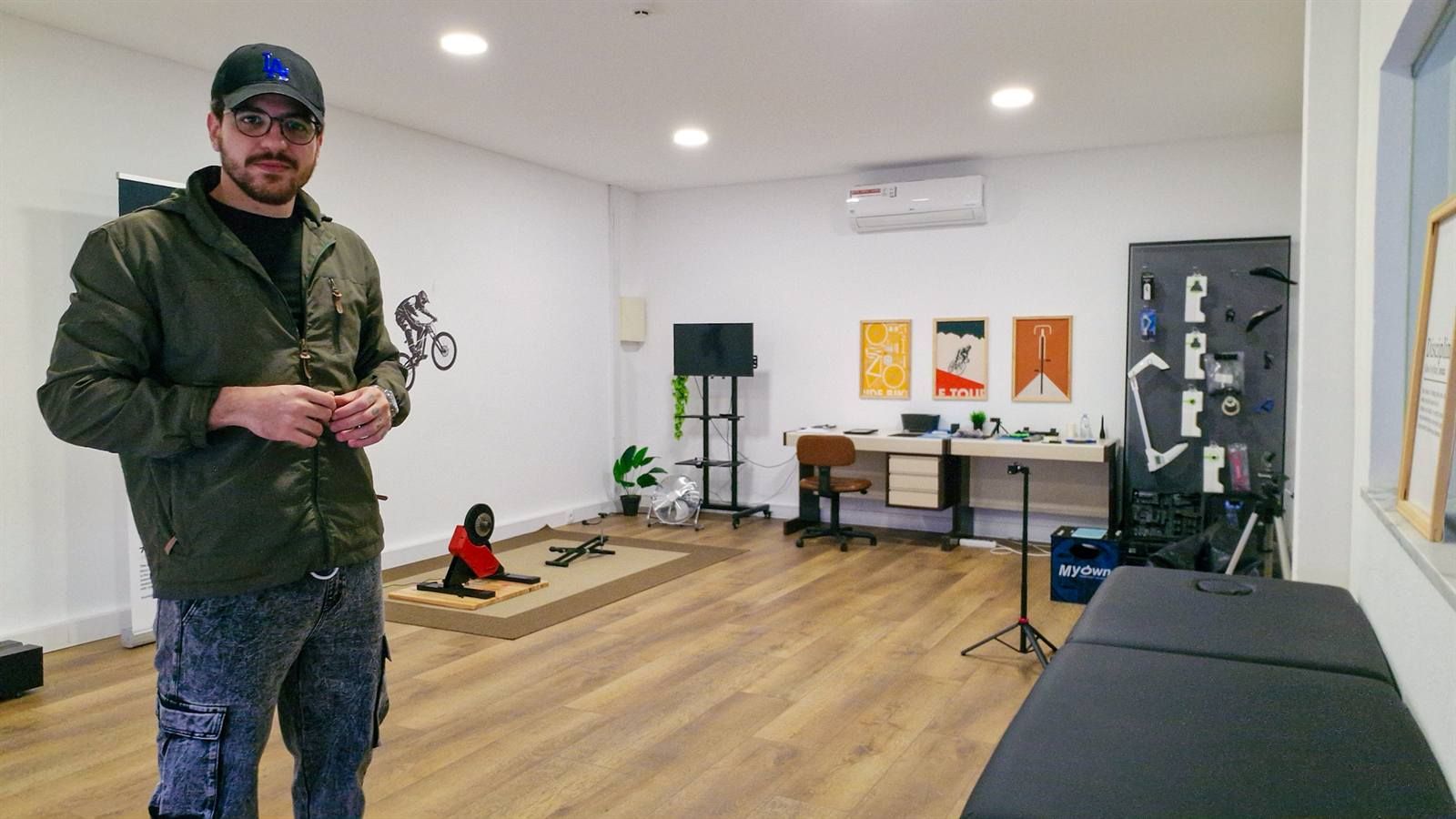
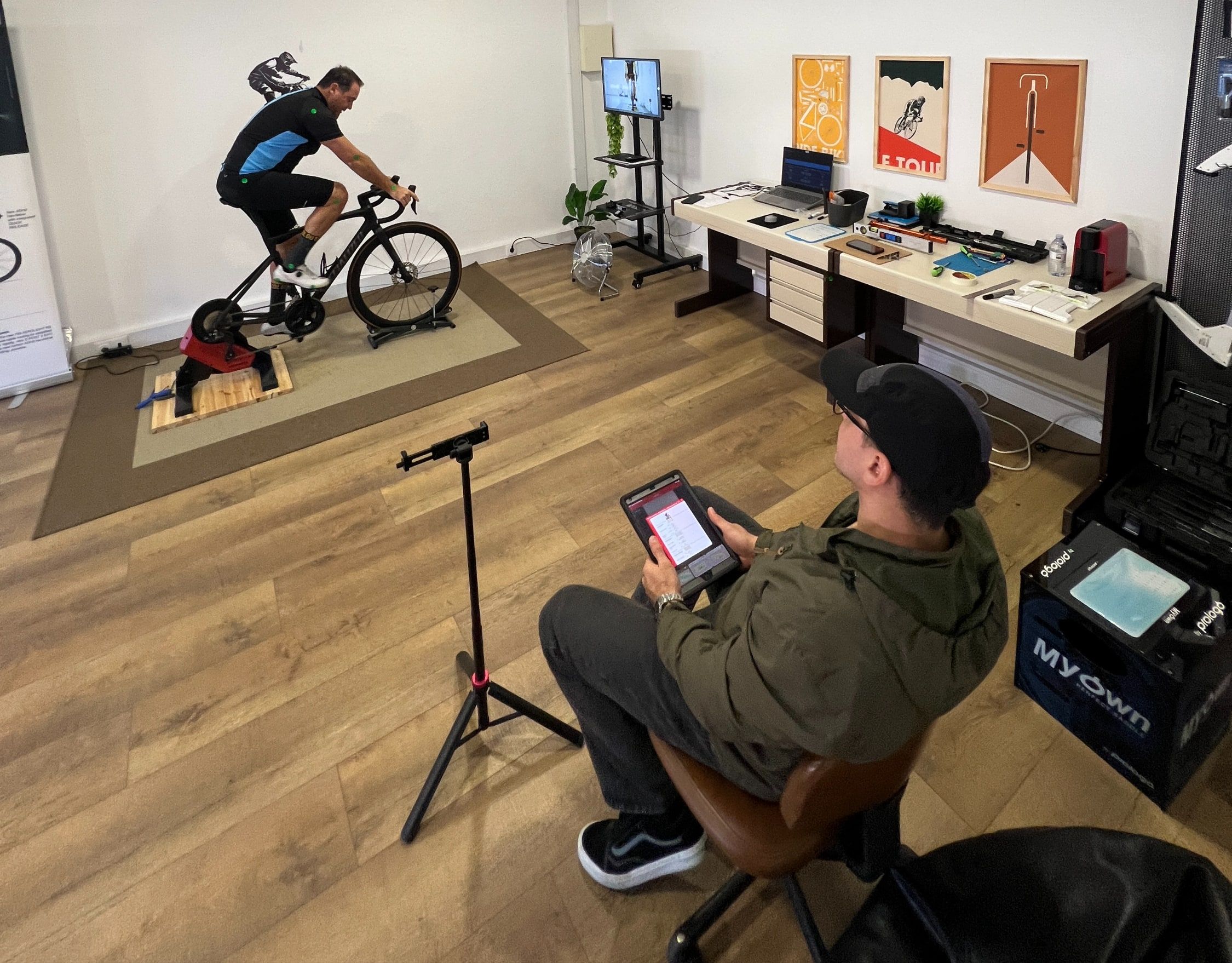
Bike fit session at the VTR Bike Lab studio in Oeiras: rider pedalling on the trainer, Victor seated with the iPad and the pedalling analysis on the TV screen
What it is

A bike fit adjusts the bike to you — not you to the bike.

Saddle, stem, handlebar and pedals have dozens of possible positions. Adjusting “by eye” stacks up errors your body ends up paying for.

Instead of guessing, I film you pedalling on the trainer, measure your joint angles and correct each point with a laser, a digital level and a tape measure — on your bike, in your kit and your shoes. Everything that changes goes into a report, so it doesn't get lost.

Victor Castelo Branco at the VTR Bike Lab studio, with the assessment bench, the trainer and the tool board in the background

Who does the fit

I'm Victor. I'm a Sport Science professional working in cycling biomechanics, cycling coaching and bike mechanics. The bike fit is done by me, start to finish, at the studio in Oeiras.

The signs that bring riders to the studio

None of these signs has a single cause. What I can do is measure — and the measurement says where to adjust.

  • Lower back or neck hurting mid-ride

    Usually down to reach to the bars and how far the trunk leans.

    I measure: trunk and shoulder angle
  • Knees complaining

    Saddle height and setback are the first suspects. Your knee angle at the top and bottom of the stroke tells me where you are.

    I measure: knee angle, min. and max.
  • Numb hands or feet

    Too much weight on the contact points — bars, saddle, pedals — or shoes and cleats out of place.

    I measure: foot angle and cleat position
  • A saddle you can't sit on

    Width, tilt and setback. The wrong saddle isn't fixed by better bib shorts.

    I measure: saddle zone and hip angle
  • Legs tiring too early

    A position that keeps the hip and knee out of their working range costs more than it delivers.

    I measure: hip and knee angle through the stroke
  • Years of riding, never measured

    Most positions were set by habit. Measuring is how you find out what to change — and what to leave alone.

    I measure: all five angles, and it goes in the report
The process

What happens in your session

Always one rider at a time, on your own bike, mounted on the studio trainer.

1h30Urbano3hPerformance

  1. Starting conversation

    Goals, injury history, type of riding and what bothers you on the bike.

  2. Off-the-bike assessment

    On the bench: mobility and left–right asymmetries, to know what your body allows before touching the bike.

  3. Pedalling filmed and measured

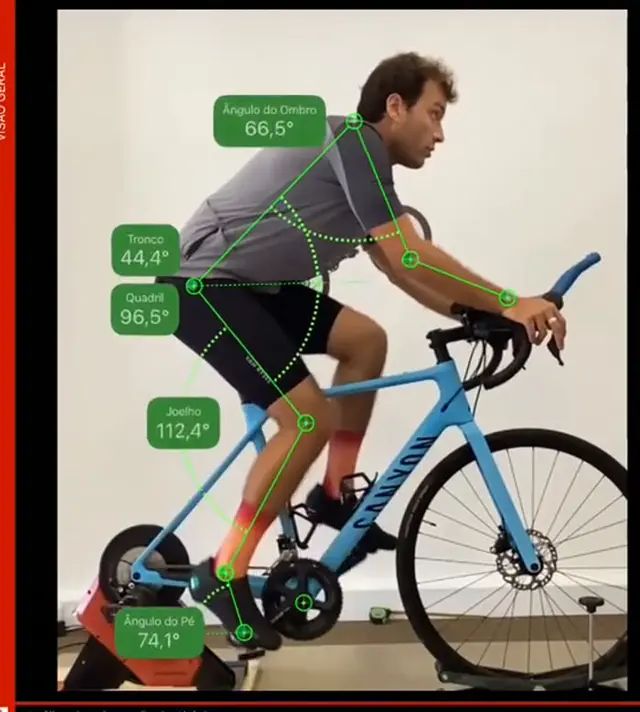
    On the trainer, camera to the side: the app tracks the joints and measures knee, hip, trunk, shoulder and foot angles on every stroke.

    Video analysis frame: skeleton overlaid on the rider with knee, hip and trunk angles measured by the app
  4. Point-by-point adjustment

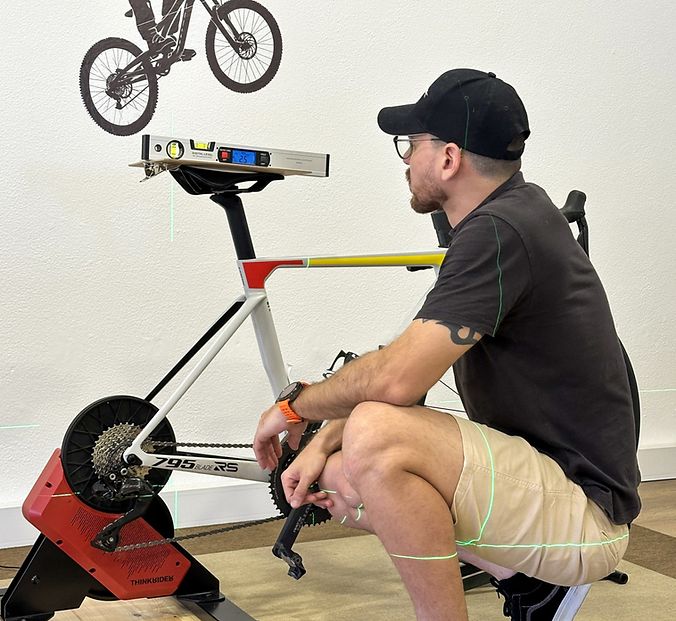
    Saddle (height, setback, tilt), stem and bars, pedals — and, on Performance, the cleats. With a laser, a digital level and a tape measure.

    Victor levelling the saddle with a digital level; laser line projected on the wall
  5. BFF Pro report

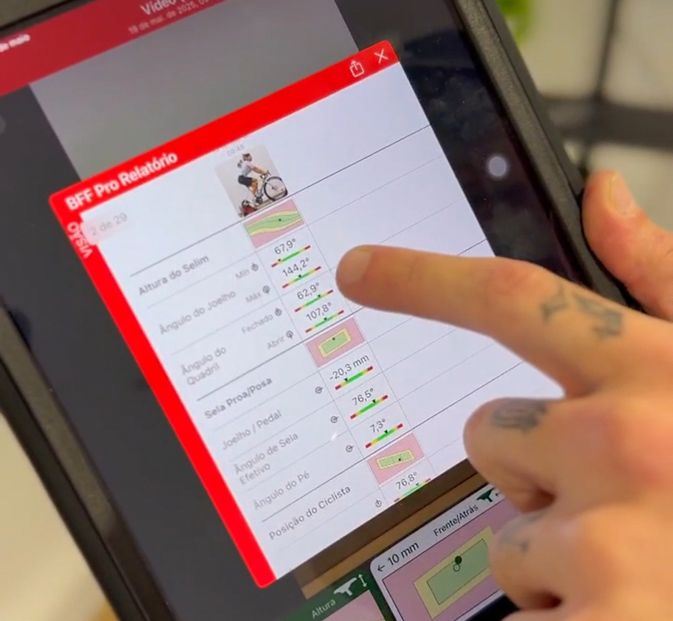
    You leave with the angles and measurements of your position. If you change bike or saddle, it's the starting point.

    BFF Pro report with the bike fit measurements, open on the iPad
What you take home

You leave with numbers, not opinions.

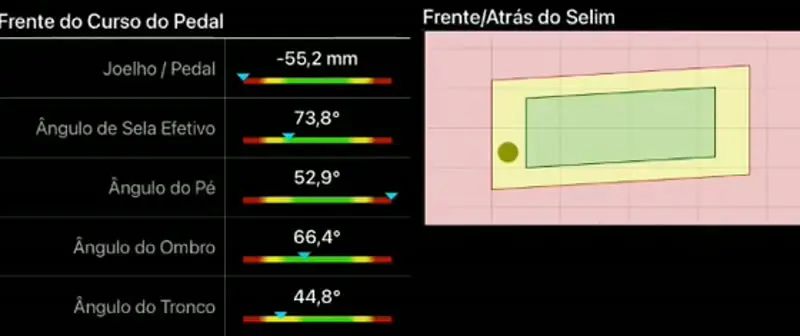
On the side, what you see on screen during the session: your pedalling filmed and the angles measured by the app. Below it, the report — the angle table and the saddle zone. It's yours to keep.

Images from a real session, published with the rider's permission.

Video analysis from a session: overlaid skeleton and shoulder, trunk, hip, knee and foot angles
Report panel: angle table with effective seat angle, foot, shoulder and trunk angles, and the saddle position chart
Google reviews

What riders say after the session

“Excellent service and super professional work. I had the bike fit and the difference in comfort and position was immediate. Victor explains everything simply and with great attention to detail. So much knowledge and care for the client. I 100% recommend it to anyone who takes cycling seriously!”

“A very attentive and competent professional. I loved the result — I felt the difference in the very first pedal strokes!”

“Attentive and effective in solving my bike's problems! Thank you Victor.”

See the reviews on Google →

Plans and prices

Two plans. The difference is your footwear.

The assessment is equally complete in both. What changes is what you wear on your feet — and the time the adjustment takes.

Normal shoes, flat pedals?→ Bike Fit Urbano
Clipless shoes, with cleats?→ Bike Fit Performance
Normal shoes · flat pedals

Bike Fit Urbano

97€1h30 · at the studio

For riders in normal shoes — city, MTB or road. I adjust the bike to your body without touching your footwear.

  • Starting conversation and history
  • Off-the-bike assessment (mobility and asymmetries)
  • Pedalling filmed and measured on the trainer
  • Saddle, stem, bar and pedal adjustment
  • BFF Pro report with your measurements

Bring: your bike and the kit you ride in.

Book Urbano · 1h30

Opens the online calendar — you pick day and time. You pay at the studio, after the session.

Shoes with cleats · clipless pedals

Bike Fit Performance

127€3h · at the studio

For riders in clipless shoes. Everything in Urbano, plus the cleat-adjustment protocol.

  • Everything in Urbano
  • Biomechanical cleat-adjustment protocol
  • Cleat placed between the 1st and 5th metatarsal (the bones behind the toes)
  • Foot stability on the pedal through the stroke

Bring: bike, kit and your shoes with cleats.

Book Performance · 3h

Opens the online calendar — you pick day and time. You pay at the studio, after the session.

Training · before touching the position

How is your training going?

If every time you go out you ride flat out, you're heading for one of two things: stopping through injury or stopping improving.

Training is the stimulus; the improvement happens in recovery. Training well means overloading and recovering — when the second part is missing, what was progress turns into fatigue that won't lift, falling performance and, often, pain. Training has to have logic.

  • Rapid, large jumps in load are likely behind a large share of non-contact injuries. High load built gradually protects — and under-training raises the risk too.

    Gabbett, 2016 · Br J Sports Med
  • Training heavy all the time, without alternating hard and easy days, was linked to more minor illnesses and niggles. Monotony counts as much as load.

    Foster, 1998 · Med Sci Sports Exerc
  • Top endurance athletes do about 80% of their sessions at low intensity and about 20% at high — not the other way round.

    Seiler, 2010 · Int J Sports Physiol Perform
  • Riding produces free radicals. In the right dose they're the signal that makes muscle adapt; in excess and without recovery, the body can't neutralise them and damage builds up — so-called oxidative stress. In overtrained athletes that damage was higher even at rest.

    Powers et al., 2020 · J Sport Health Sci  ·  Tanskanen et al., 2010 · J Sports Sci
  • Strength training cut overuse injuries to about half. Stretching on its own didn't.

    Lauersen et al., 2014 · Br J Sports Med
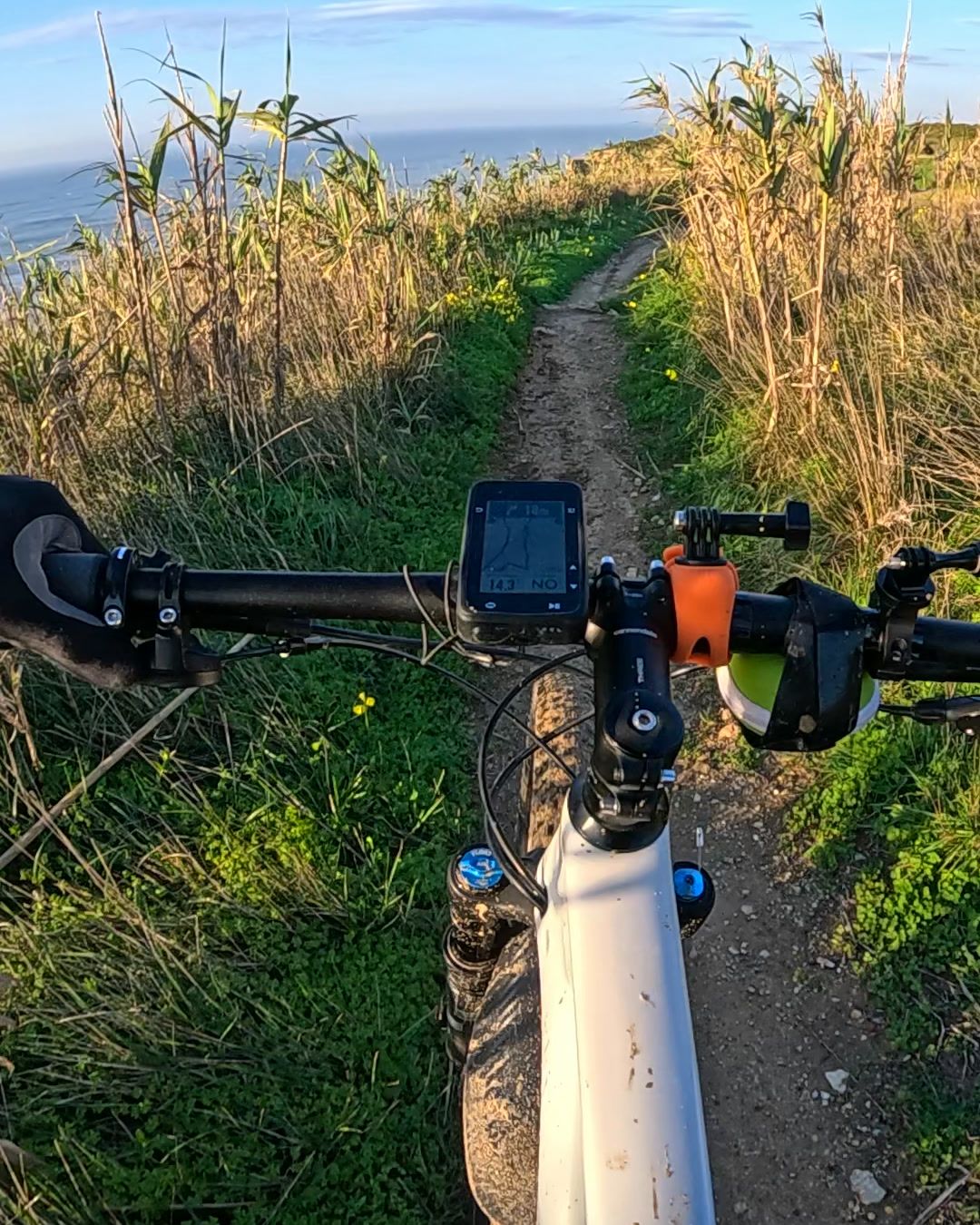
Cliff-top trail seen from the handlebar, with the bike computer, reeds on both sides and the sea in the background: one of Victor's training rides

Signs you've gone past the point

  • Fatigue a night's sleep doesn't fix
  • Performance dropping even though you're training more
  • Low mood, irritability, worse sleep
  • Colds and niggles that keep coming back
  • Pain that showed up without the bike having changed

Fatigue, performance decline and mood changes are the signs described in the ECSS/ACSM consensus on overtraining (Meeusen et al., 2013).
Macrocycle

The whole season. Where you're going: an event, a trip, riding without pain again. Everything else is designed from here.

Mesocycle

Blocks of a few weeks, each with one focus — base, strength, intensity — and an end, before the body saturates.

Microcycle

The week. Hard days and easy days alternated, with real rest in between. This is where monotony is avoided.

Session

Progressive warm-up, a main part with one goal, cool-down. A ride with no beginning and no end is just wear.

Rest isn't the absence of training: it's where training turns into performance. And nobody is at their peak all year — a peak is planned for when it matters; the rest of the year builds towards it.

What this has to do with bike fit

That's why the session starts with a conversation about your training, not with a spanner. If the bike hasn't changed and the pain showed up when the load went up, the first suspect is the training, not the position — and I'll tell you so before adjusting anything.

I'm a Sport Science professional and I work in cycling training. If you like, tell me about your training — it's the first thing I ask anyway.

The Cyclist's Pocket Manual has a training module — zones and the reference test, no expensive gear. Free (in Portuguese).

Sources: Meeusen et al., 2013 (ECSS/ACSM, Med Sci Sports Exerc) · Gabbett, 2016 (Br J Sports Med) · Foster, 1998 (Med Sci Sports Exerc) · Seiler, 2010 (Int J Sports Physiol Perform) · Lauersen et al., 2014 (Br J Sports Med) · Powers et al., 2020 (J Sport Health Sci) · Tanskanen et al., 2010 (J Sports Sci) · Issurin, 2008 (J Sports Med Phys Fitness).

Questions before you book

How long does it take?

Bike Fit Urbano takes 1h30 and Performance 3h. It's always a one-to-one session: one rider at a time.

How do I choose the plan?

By your footwear. If you ride clipless (with cleats), it's Performance — it includes the cleat adjustment. If you ride in normal shoes on flat pedals, it's Urbano. Everything else — assessment, filming, bike adjustment, report — is the same in both.

Do I need to bring my own bike?

Yes. The adjustment is done on your own bike, mounted on the studio trainer for the session. It's the bike you'll ride afterwards — so it's the one that gets fitted.

What should I bring?

Your bike, the kit you usually ride in and, for Performance, your shoes with the cleats fitted.

What if a component needs changing?

Depending on the results, some components — such as the saddle or the stem (the part that joins the bars to the frame) — may be recommended for replacement, to reach a correct and safe position. That recommendation is always part of the bike fit. The component itself is optional and charged separately: you only buy it if you want to, with no obligation.

What do I get at the end?

The BFF Pro report with the measured angles (knee, hip, trunk, shoulder, foot) and the measurements of your position. If you ever change bike or saddle, it's the starting point to reproduce the position.

Where is the studio?

Rua Sacadura Cabral 23, 1495-702 Oeiras, Portugal. It's a fixed studio — I don't do home visits. Open in Google Maps ↗

Studio in Oeiras · online booking

Book your Bike Fit

Pick the plan by your footwear, choose a time in the calendar, and turn up with your bike and the kit you usually ride in.

+351 913 844 787
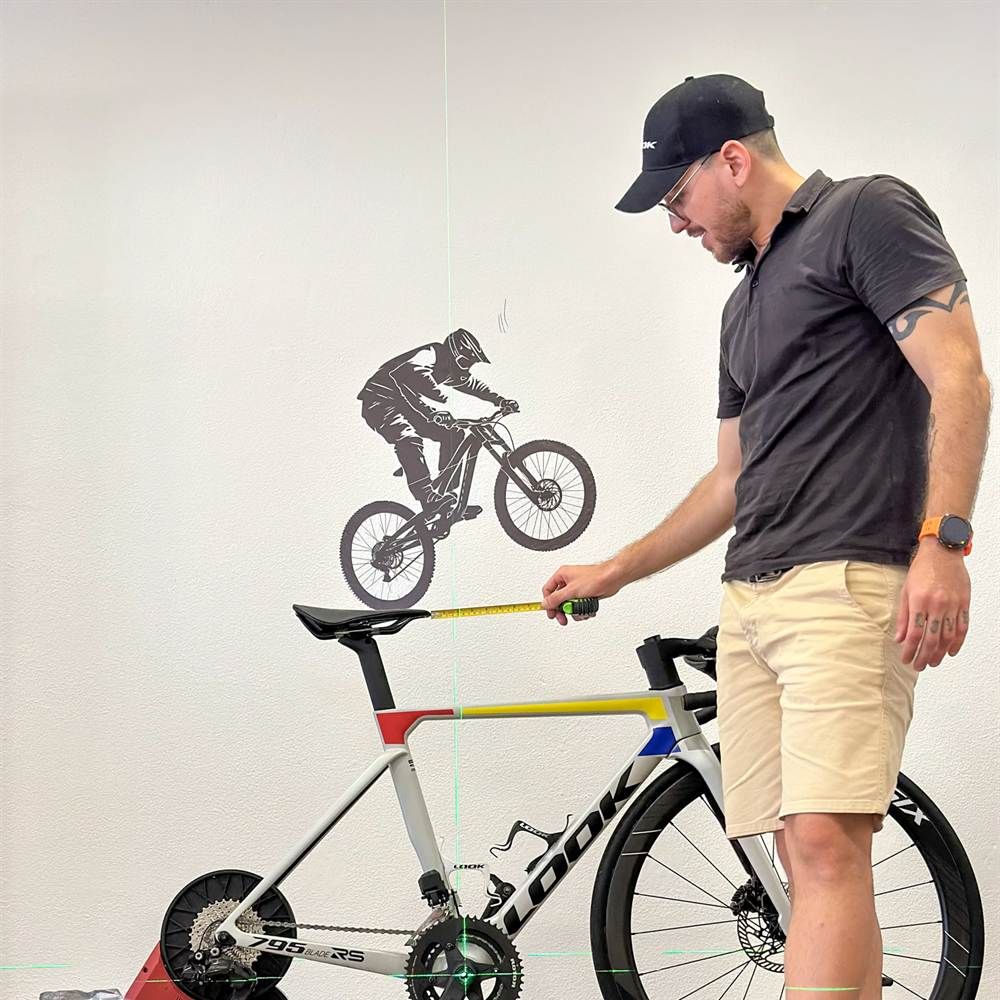
Victor Castelo Branco measuring saddle height with a tape measure, with the laser line through the bottom bracket axle, at the studio in Oeiras
VTR Bike Lab Rua Sacadura Cabral 23
1495-702 Oeiras
Open in Google Maps

Fixed studio. I don't do home visits.

Not ready to book yet? Take the Cyclist's Pocket Manual — the guide I wrote for riders who haven't had a bike fit yet. Free, by email (Portuguese).